
Why Epoxy Garage Floors Yellow in Florida (and How to Prevent It)
· By Helio Lopes de Gois
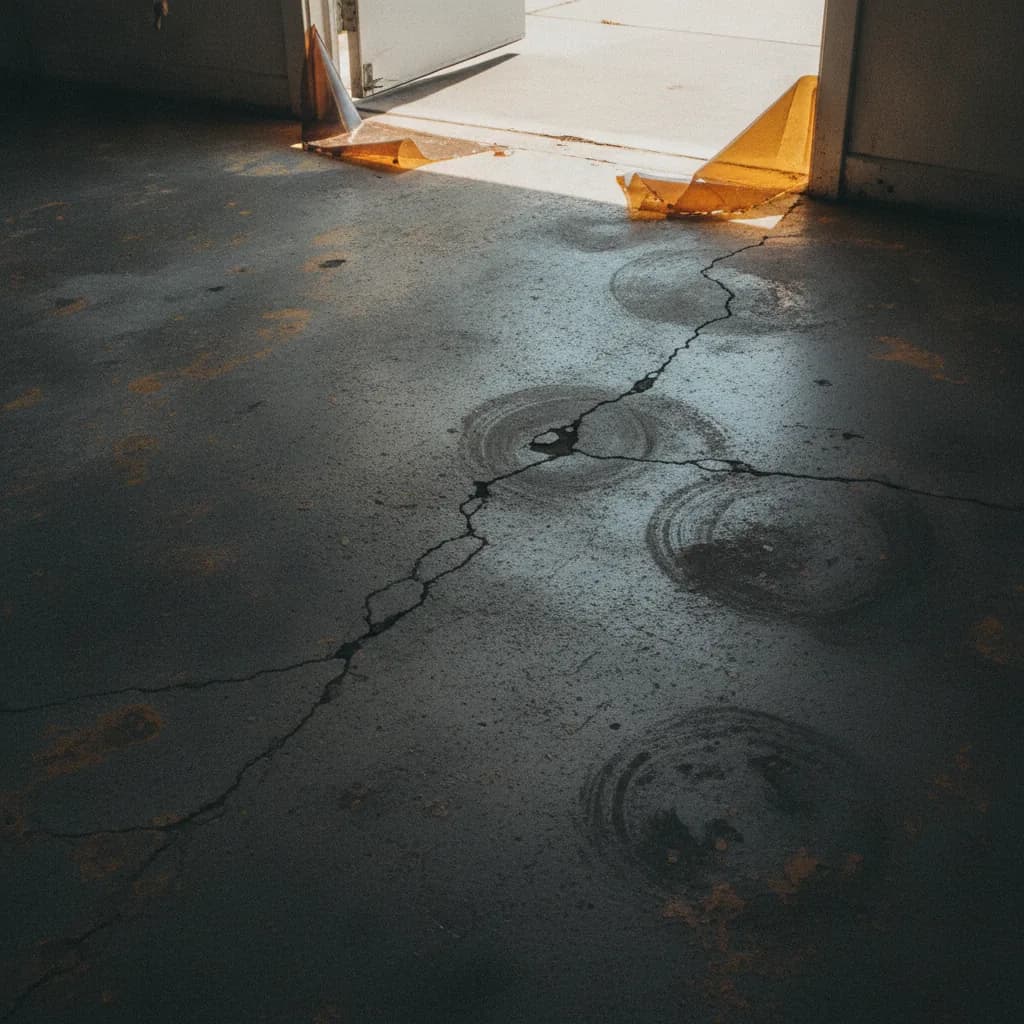
You picked a clean gray or white epoxy floor, and a year or two later there is a warm yellow cast spreading across it, worst in the bay closest to the garage door. It looks dirty even right after you mop it. That color shift is not staining and it is not your cleaning routine. It is the coating itself changing chemically, and in Central Florida it happens faster than almost anywhere else in the country.
The short version: standard epoxy resin is not UV stable. Sunlight breaks it down and it ambers. A Florida garage takes a beating from the sun every time the door opens, plus the heat that builds up inside. Below is exactly why epoxy yellows, how to tell cosmetic aging from a floor that is starting to fail, and the coating choice that prevents the problem instead of just delaying it.
Why Standard Epoxy Yellows: It Is the Resin, Not the Color
Most garage floor epoxy is made from a bisphenol-based resin. That chemistry is tough, hard, and chemical resistant, which is why it became the default for garage floors in the first place. But it has one built-in weakness: it is not UV stable. When ultraviolet light hits the surface, it breaks the bonds in the resin in a process called photo-degradation. As those bonds break, the coating starts to yellow or amber from the inside out.
This is why the yellowing looks so even and so permanent. You are not looking at a layer of grime sitting on top of the floor that a stronger cleaner would lift. You are looking at the resin itself changing color at the molecular level. Scrubbing does not touch it because the color change is baked into the coating. It happens with clear top coats and with pigmented epoxy alike, which is why even a solid-color floor drifts warm over time.
The white and light gray floors show it first and worst simply because there is more contrast. A warm amber tint is obvious against white and nearly invisible against dark charcoal. The chemistry is the same either way. The light color just makes the aging impossible to hide.
Why Central Florida Is Brutal on Epoxy
UV yellowing is a factor for any garage that sees sunlight, but Central Florida stacks the deck. Our sun is intense and it is out most of the year, so the coating is under constant exposure with very little of the winter break that floors in northern states get. More sun hours plus higher UV intensity means the photo-degradation clock runs faster here.
The garage door is the real culprit. People assume a garage is a dark, protected space, but every time that door rolls up, direct sun pours straight onto the slab, often for hours while you work in the yard, wash the car, or leave it open for airflow. Afternoon sun can rake right across the floor at a low angle, hitting the concrete surface directly rather than being filtered by walls or a roof.
Then there is the heat. A closed Florida garage can turn into an oven, and heat accelerates chemical breakdown. The combination of high UV, long exposure, and trapped heat is why a floor that might slowly amber over many years up north can show a noticeable color shift much sooner here. If your garage door faces east, west, or south, expect the sunniest bay to yellow first.
Where It Shows First: The Door Line and the Sun Path
Yellowing is almost never uniform, and that pattern is the giveaway. The strip of floor just inside the garage door goes first, because that is the zone that catches the most direct sunlight. From there it fades back into the garage, lightest where the walls and roof shade the slab. If you park two cars, the empty bay you leave open more often will usually age faster than the one that stays covered by a vehicle.
This uneven fade is one of the clearest ways to confirm the problem is UV and not something else. A chemical spill leaves a defined mark. Tire pickup leaves dark blotches under where the car sits. General grime is worst in the traffic path. UV yellowing, by contrast, follows the sun: strongest at the open door, gradual as you move deeper into the shade. Once you know to look for it, the pattern is obvious.
Cosmetic First, Structural Later
In the early stage, yellowing is purely cosmetic. The floor is still bonded, still hard, still doing its job. It just looks tired and dirty. For a lot of homeowners that alone is reason enough to want it fixed, because a discolored floor drags down the whole look of an otherwise clean garage.
The problem is that UV yellowing is usually the first visible sign of a longer breakdown. As the same photo-degradation continues, the resin does not just change color, it changes character. The coating tends to get more brittle. You may start to see chalking, a fine powdery residue on the surface as the top layer breaks down. Over time that brittleness leads to hairline cracking, loss of gloss, and eventually peeling or flaking, especially at the sun-baked door line where the exposure is heaviest and where moisture and temperature swings add stress.
So the honest way to think about a yellow floor is as a warning light. It is telling you the coating is aging under UV and that the same process, left alone, tends to move from a color issue toward a durability issue. Catching it at the cosmetic stage is a lot cheaper than dealing with a floor that has started to flake.
The Fix and the Prevention: A UV-Stable Polyaspartic Top Coat
The reason standard epoxy yellows is baked into its chemistry, so the fix is to change the chemistry of the layer that faces the sun. Polyaspartic coatings are an aliphatic polyurea, and aliphatic chemistry is UV stable by design. It does not amber under sunlight the way bisphenol epoxy does. That is why a polyaspartic top coat holds its color and clarity even in a bright, sun-exposed Florida garage, and why it is the right prevention rather than just a longer delay.
A well-built floor uses the strengths of both. In a common system, a base layer bonds to the properly prepared concrete, decorative flakes go down for grip and appearance, and a clear polyaspartic top coat seals everything and takes the UV hit. Because the polyaspartic is the layer facing the light, the whole floor keeps looking the way it did on day one instead of drifting yellow. The flake also hides everyday wear far better than a flat color.
Prep is the other half of the equation, and it is the part cheap jobs skip. A coating is only as good as its bond to the slab, so the concrete has to be mechanically profiled, usually by grinding, so the coating grips into the surface rather than sitting on top. Cracks and low spots get addressed first. Skip the prep and it does not matter how good the top coat is, because a floor that peels never gets the chance to prove it will not yellow.
Why the DIY Roll-On Kit Makes This Worse
The big-box roll-on epoxy kit is exactly the product that yellows, and it fails on both fronts. The resin in most of those kits is standard, non-UV-stable epoxy, so it is going to amber in a Florida garage. There is no aliphatic top coat in the box to protect it from the sun.
On top of that, the kits lean on an acid wash or a simple cleaning instead of real mechanical grinding, so the bond to the concrete is weak from the start. That is the combination that produces the floors you see on the curb: yellowed, chalky, and peeling in a couple of years, worst right at the door. It photographs well the week you install it and then ages badly.
The takeaway is straightforward. If you want a garage floor that keeps its color in Central Florida sun, the coating that faces the light has to be UV stable, and the concrete underneath has to be properly prepared. That is the whole difference between a floor that yellows and one that does not.
Frequently asked questions
- Can you clean the yellow out of an epoxy floor?
- No. UV yellowing is a chemical change inside the resin, not dirt sitting on the surface, so no cleaner or scrubbing will remove it. The color has changed within the coating itself. The only real fix is to recoat with a UV-stable system so the layer facing the sun no longer ambers.
- Does polyaspartic yellow like epoxy does?
- Polyaspartic is an aliphatic polyurea, and aliphatic chemistry is UV stable by design, so it holds its color under sunlight instead of ambering the way standard bisphenol epoxy does. That UV stability is the main reason it is used as the top coat in sun-exposed garages, including here in Central Florida.
- Why does my epoxy floor only look yellow near the garage door?
- Because that strip of floor gets the most direct sunlight. Every time the door opens, sun hits the slab just inside it, so photo-degradation runs fastest there and fades back into the shaded part of the garage. That uneven pattern, strongest at the open door, is the classic sign the yellowing is caused by UV.
- Is a yellowed epoxy floor a structural problem or just a looks problem?
- At first it is purely cosmetic, the floor is still bonded and hard, it just looks discolored. But the same UV breakdown that changes the color usually keeps going, and over time it can lead to brittleness, chalking, and eventually cracking or peeling. Yellowing is best treated as an early warning, not something to ignore.
- Will a DIY epoxy kit yellow in a Florida garage?
- Most likely yes. The resin in typical roll-on kits is standard, non-UV-stable epoxy with no aliphatic top coat to protect it, so it ambers under Florida sun. The kits also skip real mechanical grinding, so they tend to peel too. A ground-and-prepped floor with a polyaspartic top coat is what avoids both problems.
Related services
Serving
Ready for an exact price?
Get a free, no-pressure in-home estimate. Real numbers for your home, not a phone guess.