
7 Signs Your Garage Floor Needs a Coating (Before It Gets Worse)
· By Helio Lopes de Gois
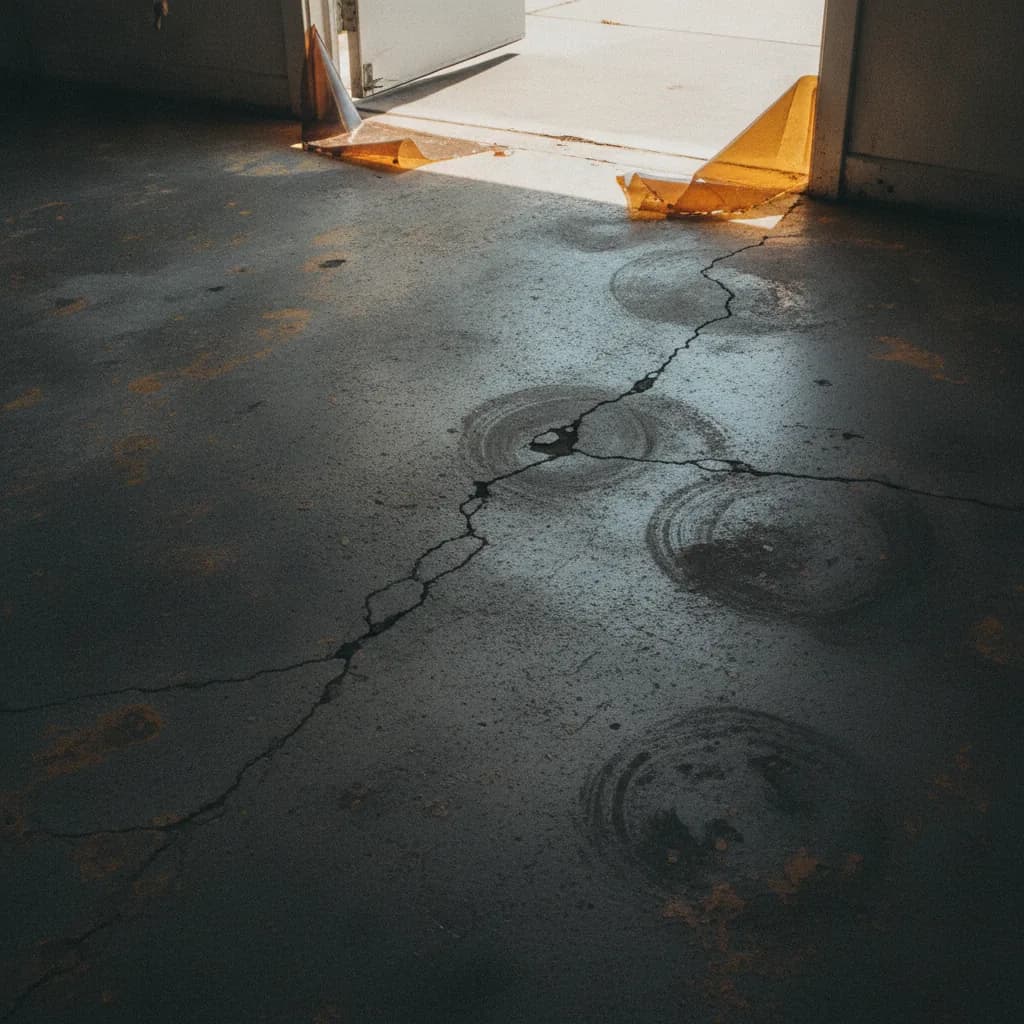
Most garage floors do not fail overnight. Bare concrete is porous and unsealed, so it slowly gives off dust, drinks up every drip, and reacts to the heat and humidity around it. By the time a floor looks obviously bad, the surface has usually been telling you for months. The good news is that the early signs are easy to read once you know what to look for.
In Central Florida, the climate speeds a lot of this up. High humidity, afternoon storms, and the heat coming off a parked car all work on an untreated slab. Below are seven signs your garage floor is ready for a coating, why each one happens, and how a polyaspartic flake system solves it in a single day of installation.
1. Concrete Dusting: White Powder on Everything
If you run a finger along a shelf or the hood of your car and pick up a fine gray-white powder, that is your slab breaking down. Concrete dusting happens when the top layer of the surface is weak or the concrete was finished with too much water, so the surface keeps shedding tiny particles as tires, feet, and tools grind across it.
That dust does not stay in the garage. It tracks into the house, settles on stored boxes, and coats anything you keep out there. It also means the very top of your slab is soft, which is why paint and box-store kits tend to let go of it later.
A polyaspartic flake coating locks the surface down for good. The system penetrates and bonds to sound concrete, then builds a hard, sealed wear layer on top, so there is nothing left to shed. The dusting stops the day the floor is coated.
2. Oil and Fluid Stains That Soak Right In
Bare concrete is basically a sponge. Drip motor oil, brake fluid, or a leaking coolant line onto it and the liquid wicks down into the pores within minutes. Once it is in, degreaser and a pressure washer only lift the surface color, because the stain lives inside the slab.
Beyond the look, oil that has soaked in keeps any future coating from sticking to that spot, so ignoring stains today makes a proper fix harder tomorrow. Rust rings from a floor jack or a dropped tool follow the same pattern.
A flake coating seals the concrete completely, so future spills sit on top of a non-porous surface. Oil, gas, brake fluid, and road salt wipe up with a rag or a quick mop instead of staining. The floor stops absorbing the mess your garage naturally makes.
3. Cracks and Spalling That Keep Spreading
Small surface cracks and spalling, where chips or flakes pop off the top of the slab, are common on older garage floors. Water gets into a hairline crack, the slab moves a little with temperature swings, and the opening slowly widens. Spalling often starts where road salt, moisture, or a weak surface pour has left the top layer brittle.
Left alone, these openings collect dirt and moisture and keep growing. They also catch a broom, snag a floor jack, and make the garage feel run-down no matter how clean the rest of it is.
A professional coating job starts with repair, not just paint over the problem. Cracks and spalled areas are ground, filled, and leveled before any coating goes down, then the flake system seals the whole surface so water can no longer work its way in. You get a smooth, uniform floor instead of a patchwork.
4. Hot-Tire Pickup or a Coating That Is Already Peeling
Here is a Florida-specific one. Tires that have been rolling on hot pavement come home warm and soft, then sit and grip the floor as they cool. On a cheap paint or a big-box epoxy kit, that grip literally pulls the coating off the concrete. If you see rubber-shaped patches lifting where your tires park, that is hot-tire pickup.
The same goes for any older coating that is bubbling, chipping, or flaking at the edges. Once a coating starts to release, moisture and dirt get underneath and the failure spreads across the floor.
Polyaspartic is built for this. It bonds far more aggressively than standard epoxy and stays flexible enough to handle heat and tire pressure, so it resists hot-tire pickup that peels lesser products. A failing old coating is fully removed and the slab is re-prepped before the new system goes down, so you are not layering good over bad.
5. Moisture or Efflorescence Coming Up Through the Slab
This sign is easy to miss and very common in Central Florida. If you notice a white, chalky, crystal-like residue on the concrete, damp patches that appear without a spill, or a musty smell in a closed garage, you likely have moisture moving up through the slab from the ground. The white residue is efflorescence, mineral salts left behind as that moisture evaporates at the surface.
Our high water table and humidity mean a lot of slabs carry more moisture than owners realize. That vapor is one of the top reasons DIY epoxy kits fail here, because they trap it and lose their bond from underneath.
This is exactly why the prep matters. A proper installation includes checking the slab and using systems suited to Florida moisture conditions, with mechanical grinding that gives the coating a bond a rolled-on kit cannot match. A correctly installed polyaspartic flake floor holds up where a hardware-store kit peels.
6. The Floor Is Impossible to Keep Clean
Some floors just refuse to look clean. You sweep, you mop, and an hour later the porous surface has grabbed dust and grime again. Every tire scuff, leaf-blower streak, and drip of who-knows-what settles into the concrete texture and stays there. It is not that you are cleaning wrong, it is that raw concrete has nowhere for dirt to go except into itself.
A sealed flake surface changes the whole routine. The floor becomes smooth and non-porous, so a dust mop or a quick rinse with a hose gets it looking new again. Dirt sits on top instead of soaking in, which is a real quality-of-life upgrade for a space you use every day.
7. You Are Finishing the Garage as a Gym, Workshop, or Showroom
Not every reason to coat a floor is a defect. If you are turning the garage into a home gym, a workshop, a hobby space, or a clean showroom for a car you are proud of, bare gray concrete undercuts all of it. Dropped weights chip an unsealed slab, sawdust and finishes stain it, and the whole room reads unfinished no matter what you put in it.
A polyaspartic flake floor is the finish that ties the space together. The flake blend hides minor imperfections, adds slip resistance underfoot, and gives you a durable, showroom-clean surface in the color you choose. It stands up to dropped tools and weights and reflects light so the garage feels brighter and larger.
Because the system cures fast, most installs are done in a single day and ready to walk on and park on soon after, so the room is out of commission for as little time as possible.
Frequently asked questions
- How do I know if my garage floor needs a coating or just a cleaning?
- If a good cleaning gets your floor looking right and it stays that way, you may be fine for now. But if you see dusting, stains that will not lift, cracks or spalling, moisture or white efflorescence, hot-tire marks, or a peeling old coating, cleaning only treats the symptom. Those are structural surface issues that a sealed coating actually solves.
- Why do so many DIY epoxy kits fail on Florida garage floors?
- Two big reasons: moisture and prep. Central Florida slabs often carry vapor rising from the ground, and roll-on kits trap it and lose their bond from underneath. They also skip mechanical grinding, so they never grip the concrete the way a professionally prepped polyaspartic system does. Add hot-tire pickup from our climate and most kits start peeling within a year or two.
- What is efflorescence and is it a serious problem?
- Efflorescence is the white, chalky, crystal-like residue you sometimes see on concrete. It forms when moisture moves up through the slab and evaporates, leaving mineral salts behind. On its own it is cosmetic, but it is a clear sign the slab is passing moisture, which is important to account for before any coating goes down so the new floor bonds correctly.
- Can a coating fix cracks and stains, or does the floor need repair first?
- Repair comes first. A proper installation grinds and fills cracks and spalled areas and addresses soaked-in stains during prep, then the flake coating seals the whole surface. Coating over unrepaired damage just hides it temporarily, which is why professional prep is the part of the job that makes the finish last.
- How long does a polyaspartic flake garage floor take to install?
- Most residential garage floors are completed in a single day. Polyaspartic cures quickly, so the floor is typically ready to walk on and park on soon after, far faster than traditional epoxy, which can take several days to cure.
Related services
Serving
Ready for an exact price?
Get a free, no-pressure in-home estimate. Real numbers for your home, not a phone guess.