
Pool Deck Resurfacing in Florida: Options, Cost, and What Lasts
· By Helio Lopes de Gois
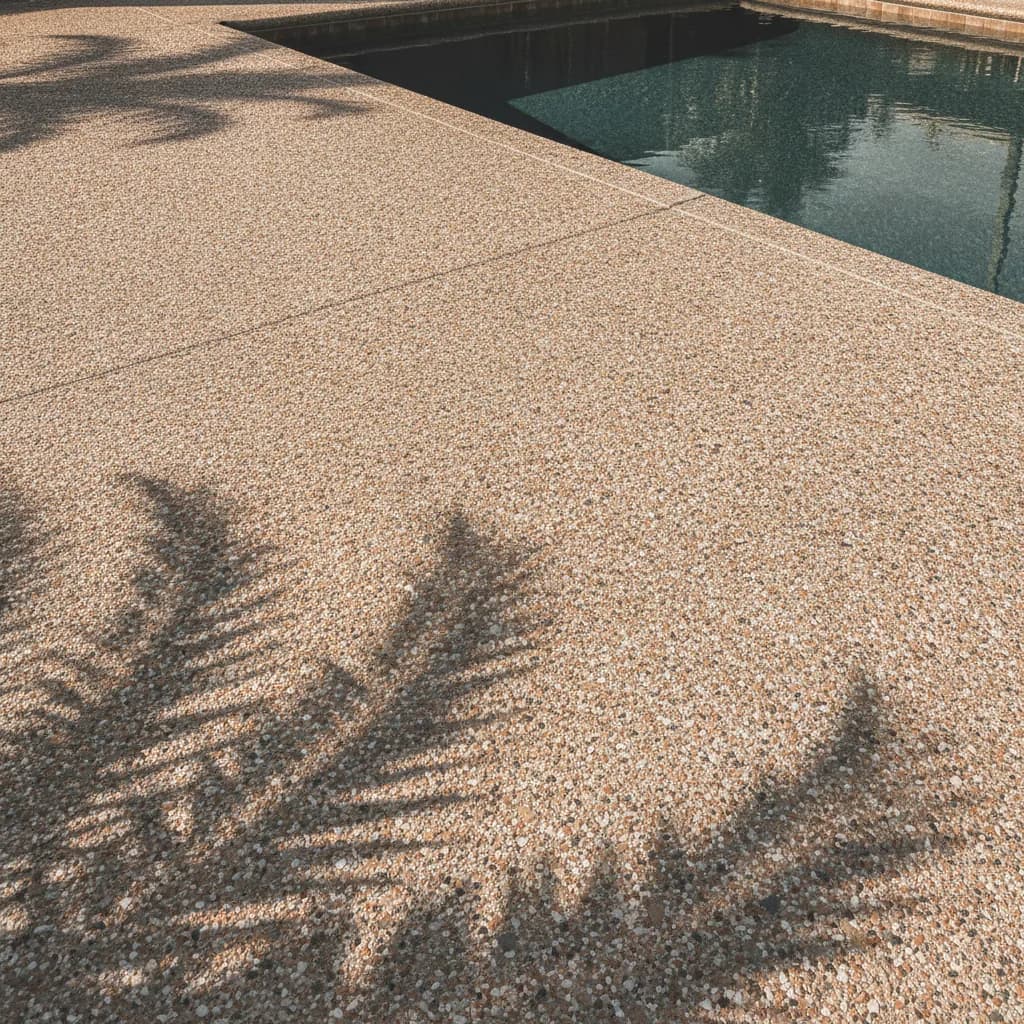
A pool deck in Florida works harder than almost any other slab on your property. It sits in direct sun most of the day, gets splashed with chlorinated and salt water, then takes a soaking from the afternoon storms that roll through Central Florida most summer days. Add the freeze-free but constantly humid climate, and bare or painted concrete tends to go slick when wet, spider-crack over time, and bake hot enough to hurt bare feet by noon.
Resurfacing fixes all of that at once without tearing out the slab. Instead of replacing concrete, a resurfacing system bonds a new textured, sealed wear layer over the existing deck. Done right, it gives you a surface that grips underfoot when wet, shrugs off pool chemicals and UV, and stays noticeably cooler than raw gray concrete. This guide covers the options that hold up in our climate, the real cost drivers, and how to tell a finish that will last from one that fails in a season or two.
Why Florida Pool Decks Fail Faster
Understanding what breaks a deck down helps you choose a resurfacing system that actually solves the problem instead of hiding it for a year. In Central Florida, four forces work against your deck at the same time.
First, UV exposure. Sun hits the deck for most of the daylight hours, and many low-cost coatings and paints chalk, fade, and get brittle under that constant load. Second, water chemistry. Chlorinated and salt-treated water splashes out with every swim, and those chemicals slowly attack sealers that were not built to resist them. Third, moisture cycling. Daily storms soak the surface, then the sun bakes it dry, over and over, which stresses any coating that is not properly bonded and breathable. Fourth, heat. Bare concrete and dark finishes absorb heat and radiate it back up, which is why a deck can be uncomfortable to stand on by early afternoon.
A resurfacing system built for this environment addresses each force: a UV-stable topcoat, chemical-resistant sealer, correct surface prep so the coating bonds and does not trap moisture, and a lighter color that reflects heat instead of storing it.
Your Main Resurfacing Options
Most Florida pool decks are resurfaced with one of a few proven systems, and the right pick depends on the look you want and how the slab is holding up.
Textured cementitious overlays are a spray-applied or troweled coating that bonds over the old concrete and can be finished with a knockdown or brushed texture. They renew a tired deck, hide minor surface flaws, and the built-in texture gives grip for wet, barefoot use. This is a common, budget-friendly path for decks that are structurally sound.
Slip-resistant broadcast finishes use a resin base with a fine aggregate or flake broadcast into it, then sealed. The broadcast media builds a consistent micro-texture that stays grippy when wet, and the system tends to be more chemical and UV resilient than a plain painted or thin coating. These finishes come in a wide color range so you can dial in a lighter tone that reads clean and stays cooler.
Decorative options like stamped or stenciled overlays and exposed-look finishes give you patterns and stone or paver looks over the existing slab. They deliver a high-end appearance, though the visual detail is only as durable as the sealer protecting it, which matters a lot in our sun.
The wrong option for Florida is a straight deck paint or a thin single-coat product with no real texture and no UV-stable sealer. It looks fine on day one, then chalks, gets slick, and peels at the edges.
What Actually Makes a Deck Last
Two decks can use the same product category and end up years apart in lifespan. The difference is almost always in the details, so these are the factors worth prioritizing.
Surface prep and crack repair come first. The coating is only as good as its bond, so the slab needs proper mechanical profiling (grinding or shot-blasting rather than a quick pressure wash) and honest crack repair before anything goes down. Cracks that are skimmed over instead of properly addressed tend to telegraph back through the new surface.
A UV-stable sealer or topcoat is non-negotiable here. In a climate with this much sun, an aliphatic or otherwise UV-stable topcoat resists the yellowing, chalking, and brittleness that ruin cheaper finishes. Ask specifically whether the topcoat is UV-stable and rated for pool-deck chemical exposure.
Texture tuned for wet, barefoot use is the safety piece. You want enough grip to be secure when the deck is soaked, but not so aggressive that it scrapes bare feet or is hard to clean. A finish built for pool decks strikes that balance on purpose.
Color and heat matter more than people expect. Lighter, reflective tones absorb less heat and stay more comfortable underfoot than dark gray or near-black finishes, which is a real quality-of-life difference on a Central Florida summer afternoon.
Add sound drainage so water sheets off toward the deck edges and does not pool, and you have the combination that separates a finish that lasts from one that fails early.
What Pool Deck Resurfacing Typically Costs
Pricing varies a lot by project, so treat any number you see online as a starting range, not a quote. As a general, market-typical guide, basic textured overlay resurfacing in this region often lands in the lower per-square-foot range, mid-tier slip-resistant broadcast systems fall in the middle, and decorative or multi-layer finishes sit at the higher end. Every deck is different, and the only accurate number comes from someone measuring your actual slab.
The biggest cost drivers are straightforward. Deck size is the first: more square footage means more material and labor, though larger decks sometimes see a slightly lower per-foot rate. Slab condition is next: a sound deck that mostly needs a refresh costs less than one with significant cracking, spalling, or drainage problems that must be corrected before coating. Finish and texture is the third: a simple sealed texture costs less than a decorative broadcast or a patterned decorative overlay, and premium UV-stable, chemical-rated topcoats add cost but buy real longevity.
Other factors that move the number include tricky access, extensive prep or old-coating removal, and how much crack and drainage repair the slab needs. Because those variables swing so widely, resist any contractor who quotes a firm price sight unseen. A proper on-site look is how you get an accurate figure and avoid surprises.
How to Choose a Contractor in Central Florida
Because the failure points here are so specific to our climate, the installer matters as much as the product. A few things to look for keep you out of trouble.
Ask how they prep. The answer should involve mechanical profiling and real crack repair, not just a pressure wash and a coat of product. Ask specifically about UV-stable topcoats and chemical resistance, since a contractor who works on Florida pool decks regularly will have a clear answer about how their system handles sun and pool chemistry.
Ask about texture and heat. A good installer will talk through slip resistance for wet, barefoot use and how color choice affects surface temperature, because they have watched decks perform through our summers. Look for someone who does a real on-site assessment, measures the deck, checks drainage, and gives you a written scope rather than a number over the phone.
Owner-operated, local outfits that focus on concrete coatings tend to be a strong fit for this work because the person quoting the job is often the person standing behind it. That accountability shows up in the prep and the finish.
Frequently asked questions
- Can I resurface my pool deck instead of replacing it?
- In most cases, yes. If the slab is structurally sound, resurfacing bonds a new textured, sealed wear layer over the existing concrete, which renews the look and adds slip resistance without the cost and disruption of tearing out and pouring a new deck. Replacement is usually only needed when the slab itself is failing, badly sunken, or heavily damaged. An on-site assessment is the reliable way to know which path fits your deck.
- Will a resurfaced pool deck be slippery when wet?
- A properly specified pool-deck finish is built to grip when wet. Slip-resistant broadcast systems and textured overlays add a controlled micro-texture tuned for wet, barefoot use, so the deck stays secure right after a swim or an afternoon storm. The key is choosing a system designed for pool decks rather than a smooth paint or a thin coating with no real texture.
- How do I keep my pool deck from getting so hot underfoot?
- Heat comes down largely to color and finish. Lighter, reflective tones absorb less sun and stay noticeably cooler than dark gray or near-black surfaces, which matters on a hot Central Florida afternoon. A resurfacing finish in a lighter color, paired with a texture that is comfortable on bare feet, makes a real difference in how usable the deck is at midday.
- How long does a resurfaced pool deck last in Florida?
- Lifespan depends far more on prep and product quality than on the category of finish. A deck with proper mechanical prep, honest crack repair, and a UV-stable, chemical-resistant topcoat holds up for many years of Florida sun and pool chemistry, while a thin painted finish with poor prep can start failing within a season or two. Routine rinsing and occasional resealing help a quality finish reach the top of its range.
- How much does pool deck resurfacing cost?
- It depends on the deck, so treat any online figure as a range rather than a quote. Cost is driven mainly by deck size, the condition of the existing slab, and the finish and texture you choose, with decorative and premium UV-stable systems costing more than a basic sealed texture. The only accurate number comes from an on-site measurement of your actual deck, which is why a free on-site quote is the right first step.
Related services
Ready for an exact price?
Get a free, no-pressure in-home estimate. Real numbers for your home, not a phone guess.